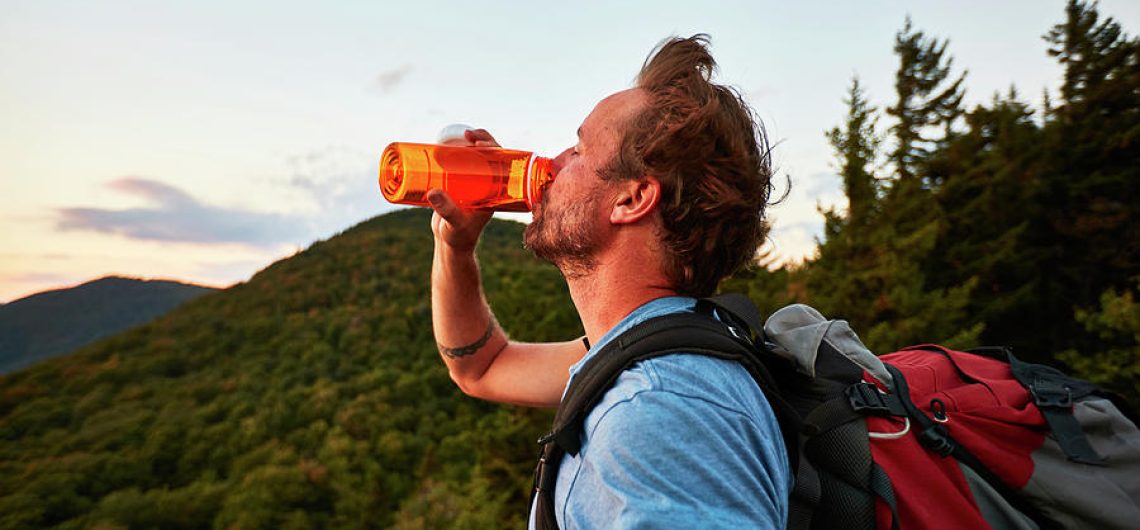
Easy Guide
Gear matters.
Shoes matter.
Weather matters.
But none of them will stop a hike faster than dehydration.
In the mountains, performance is limited not by strength — but by hydration.
Most hiking fatigue is not lack of fitness. It is lack of water.
Your body is a cooling system.
While hiking you constantly lose water through:
sweat
breathing
temperature regulation
altitude adaptation
Even before you feel thirsty, dehydration has already started affecting:
heart rate
muscle efficiency
coordination
decision making
By the time you feel thirsty, you are already behind.
Mild dehydration causes:
headache
unusual fatigue
slower pace
heavy legs
Moderate dehydration causes:
dizziness
cramps
nausea
loss of balance
Severe dehydration can stop the hike completely and may require evacuation.
Many “I’m just tired” situations are actually dehydration.
There is no universal number — but there is a reliable range.
Average consumption during hiking:
| Conditions | Water Needed |
|---|---|
| Easy winter hike | 1.5 – 2 L |
| Moderate mountain hike | 2 – 3 L |
| Hard hike / high elevation | 3 – 4 L |
| Hot summer exposure | 4 – 5+ L |
If you finish your water early → you underestimated the mountain.
They drink when resting.
That is wrong.
You should drink small amounts continuously while walking.
Waiting for breaks creates a dehydration cycle:
Drink a lot → sweat a lot → dehydrate again
Steady intake keeps performance stable.
On long or hot hikes, water alone is not always enough.
Sweat removes salts needed for muscle function.
Without electrolytes, you can cramp even if you drank enough.
Signs you need electrolytes:
persistent muscle twitching
salt marks on clothes
cramps during descent
Always check before joining:
distance
elevation gain
temperature
sun exposure
refill points
Never assume water sources exist.
Mountain rule:
Carry more than you think you need.
Weight slows you.
Dehydration stops you.
Fitness helps you climb.
Water allows you to continue.
Many hikers train their legs — but forget to plan hydration.
And the mountain always punishes that mistake first.
Before every hike ask yourself one question:
Do I have enough water for the effort — not the distance?